
For years, I’ve been on a journey that, for a long time, felt like an unconscious drift. I was moving through life, enjoying myself, and gradually, almost imperceptibly, shedding over 100 pounds. It wasn’t a focused mission to be “skinny” or an athlete; it was just… happening. I have a series of four photos, taken in the same bathing suit from 2021 to 2025 (missed 2024, oops!), that perfectly capture this subtle, yet monumental, transformation. Looking at them now, it’s wild to see how much my body changed without me even fully grasping the scale of it. To put 100 pounds in perspective, that’s almost the exact weight of my beloved dog – imagine carrying that around!
But here’s the kicker: despite this incredible weight loss and years of consistent cardio, something still felt off. And it wasn’t until very recently that a series of “aha!” moments started connecting the dots, revealing a hidden chapter in my health story that’s profoundly impacting my current fitness goals.

The Hyrox Hurdle: Why Running Felt Like Drowning
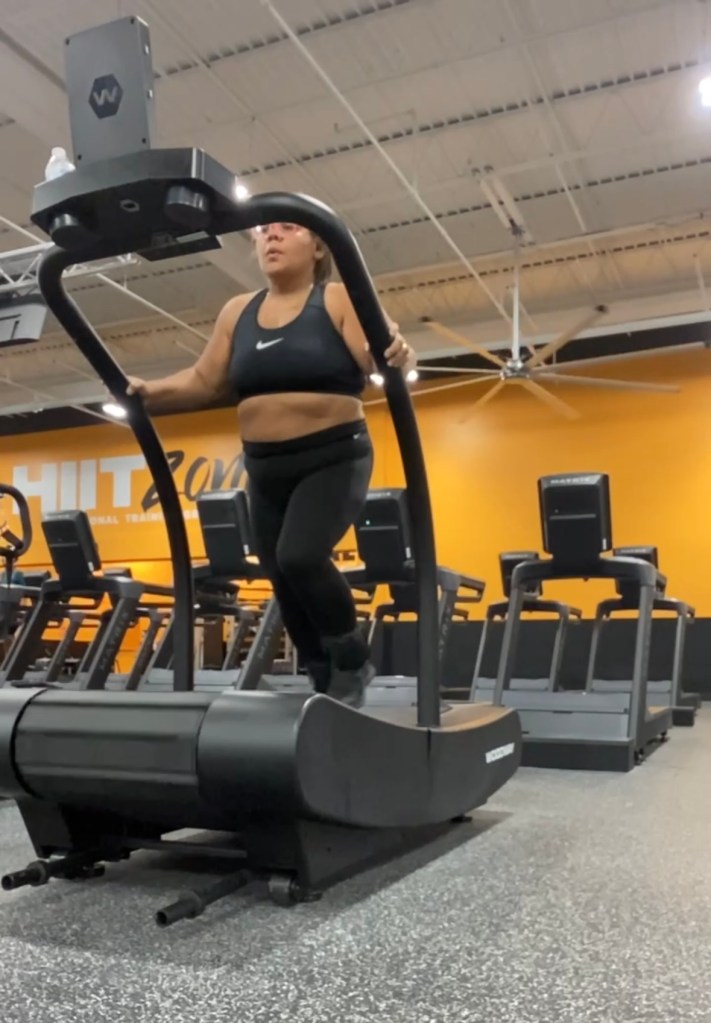
My current obsession is Hyrox – a fitness race that combines running with functional workout stations. As I started my “pre-work” training, focusing heavily on running, I hit a wall. Treadmill runs felt disproportionately hard. I could power through a bike session, crush a strength workout, but sustained running left me winded, my lungs burning, making me feel like I was running through thick mud, even on flat ground. I just couldn’t understand it. I’d lost over 100 pounds, my cardiovascular endurance should be significantly better, right?
Then, the first “aha!” moment hit me like a ton of bricks. It took me back several years, to a time when I was exploring bariatric surgery. As part of the pre-op process, I needed pulmonary clearance. During one of those appointments, a doctor mentioned something that barely registered at the time: due to my relatively petite bone frame, the significant amount of extra fat I was carrying was literally squeezing my lungs. They noted a “mild impairment in my diffusion capacity.”
At the time, it didn’t seem like a big deal. After additional testing, I did get full pulmonary clearance, meaning my lungs were deemed healthy enough for surgery and not posing a major immediate health risk. So, I filed that information away and moved on.
Decoding Diffusion Capacity (DLCO): My Lung’s Hidden Struggle
Fast forward to today, and that “mild impairment in diffusion capacity” is screaming at me as the likely culprit behind my running woes. Let’s break down what that means.
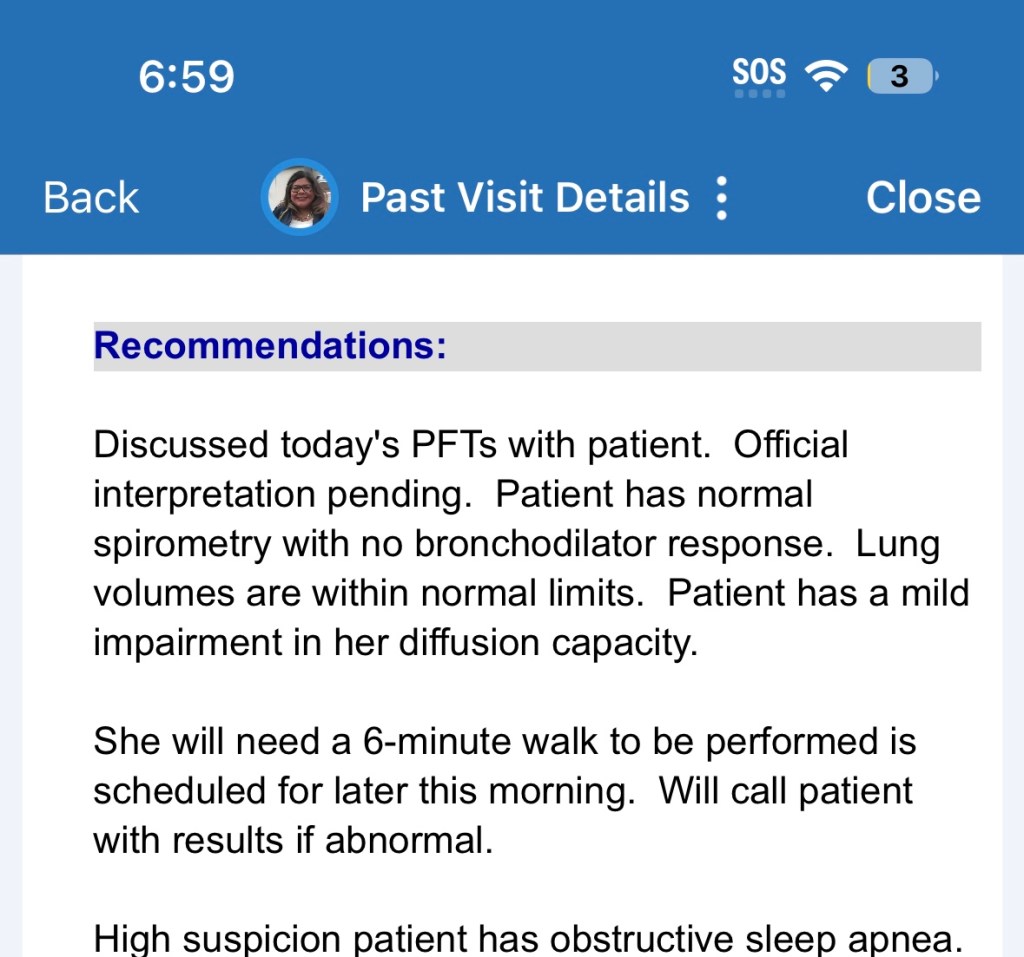
Diffusion capacity of the lung for carbon monoxide (DLCO) is a test that measures how well oxygen moves from your lungs (specifically, your tiny air sacs called alveoli) into your bloodstream, where it can then be transported to your muscles. It’s a critical component of gas exchange.
When you have an impaired DLCO, even a mild one, it means this oxygen transfer isn’t happening as efficiently as it should. Think of it like this: your lungs are trying to fill up your body’s “oxygen tank,” but the hose has a slight crimp in it. For everyday activities, you might not notice it. But when you start demanding a lot of oxygen – like during an intense run, where your muscles are screaming for fuel – that mild impairment becomes a major bottleneck. My body simply wasn’t getting the oxygen it needed fast enough to sustain a comfortable running pace, especially compared to the effort I was putting in.
This explains why, despite losing the equivalent of another human being from my body and building up a solid cardio base, running still felt like an uphill battle. My cardiovascular system was stronger, my legs were lighter, but my lungs were still operating with a subtle handicap from their years of being compressed.
The Cycling & Choreography Connection: More Subconscious Compensations

The revelations didn’t stop there. As I mulled over the DLCO realization, another profound “aha!” moment hit me, explaining some long-standing preferences in my workouts.
For as long as I can remember, when I’m on a spin bike, I’ve always naturally gravitated towards hills and sustained, longer efforts rather than short, explosive sprints. Similarly, in any fitness class with choreography, I’d unconsciously favor the easier, less frantic movements over anything requiring quick, intense bursts of energy.
I always just thought it was my preference, my “style.” But now, it’s crystal clear: my body was subconsciously compensating for that mild diffusion impairment all along!
- Hills and sustained efforts on the bike, while challenging, allow for a more consistent, albeit higher, demand on oxygen without the sudden, intense spikes that sprints require. My lungs had more time to perform their slightly less efficient oxygen transfer.
- Easier choreography means less rapid, deep, and forceful breathing. It’s less demanding on the respiratory system in terms of quick, high-volume oxygen intake.
My body was intuitively picking activities that minimized the stress on its slightly compromised oxygen transfer system. It’s fascinating how our bodies adapt and communicate with us, even when we’re not consciously listening!
Looking Forward: Running Towards New Goals
This series of revelations has been incredibly empowering. It’s not an excuse; it’s a diagnosis that provides a clear path forward. I don’t just want to walk my Hyrox laps; I want to run them. Even if it’s just two laps to start, I want to be able to push past that feeling of being perpetually out of breath.
This means my training now has a new, focused dimension: improving my respiratory efficiency. While I have pulmonary clearance and am not dealing with a severe condition, understanding this past impairment allows me to tailor my approach. This might involve specific breathing exercises, continued consistent cardio to strengthen lung capacity, and gradual increases in running intensity, always listening to my body.
I’m incredibly excited to embark on this next phase of my fitness journey. It’s a testament to how our past health can influence our present, and how self-awareness and understanding can unlock new possibilities. I’ll be sharing more about my strategies and progress as I aim to conquer this running challenge.
Have you ever had a past health detail suddenly make perfect sense in your current fitness journey, or explain why you’ve always gravitated towards certain types of workouts? I’d love to hear your stories in the comments below!

 dghmoves.com
Leave a comment